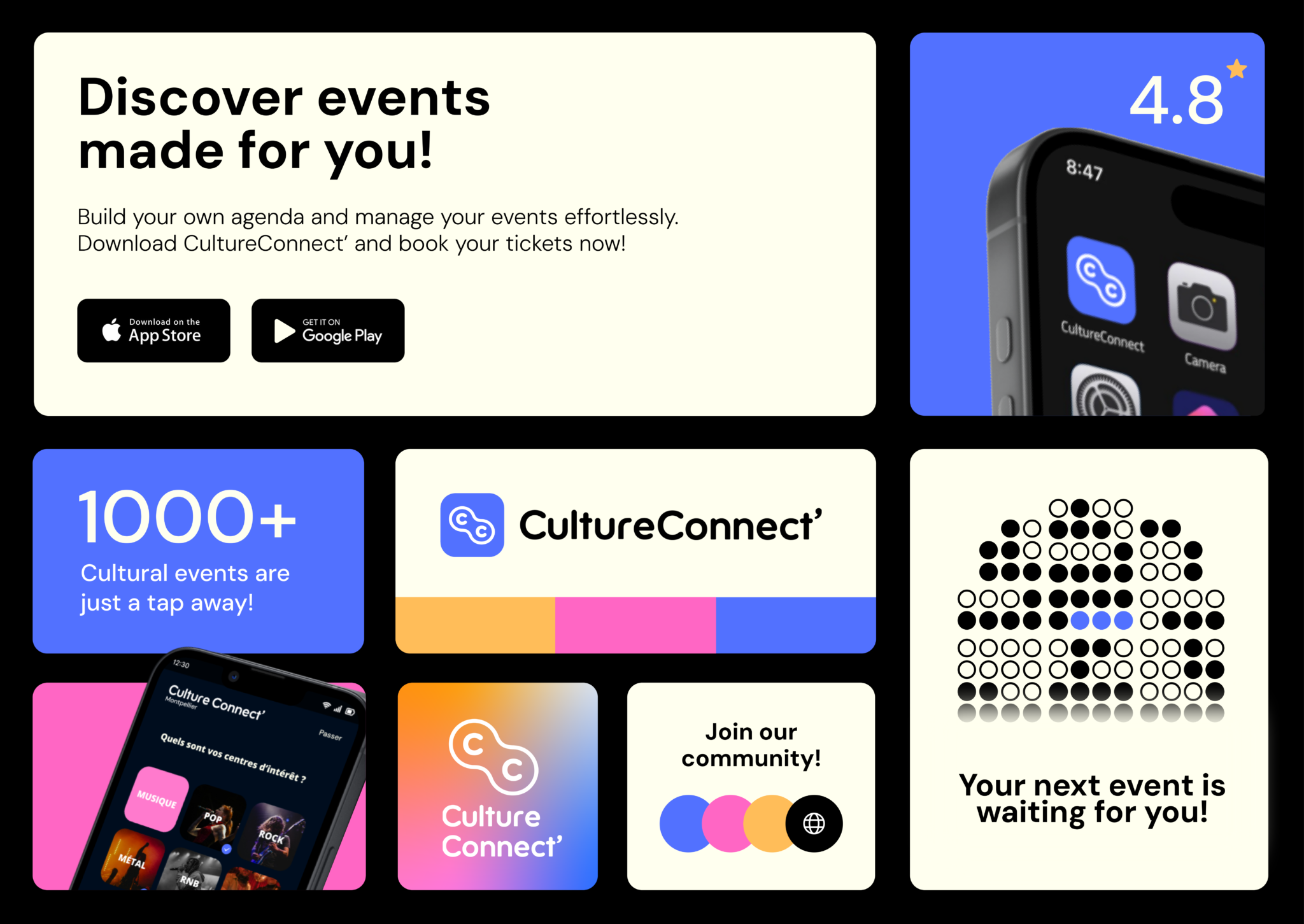
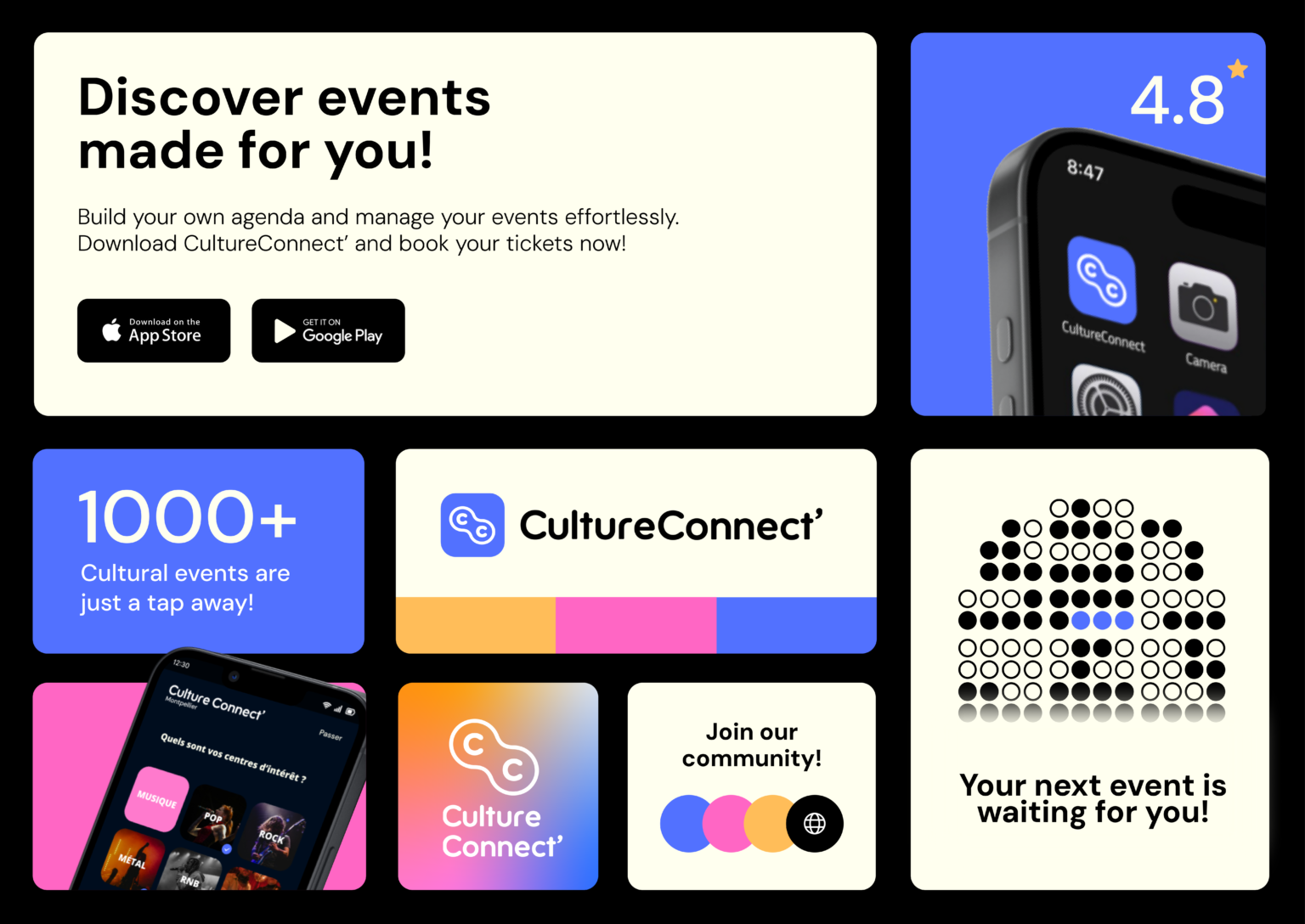
CultureConnect‘ is an mobile application designed to make local cultural events in the city of Montpellier more accessible by centralizing concerts, exhibitions, performances, and other cultural activities in one place. Born from fragmented information and a lack of visibility for event organizers, the app offers a complete and regularly updated cultural feed, enhanced by a personalized recommendation algorithm.

The application targets both students and young professionals, as well as event organizers and programmers who want an intuitive tool to manage, promote, and discover events. Designed with eco-design principles in mind, CultureConnect‘ complies with RGAA accessibility standards and GDPR requirements.

My Role

UX/UI Designer, UX Researcher, Digital Project Manager

Tools Used

Figma, FigJam, Illustrator, Canva, Excel

Timeline

2023 – 2024

Duration

10 months

My Role

UX/UI Designer, UX Researcher, Digital Project Manager

Tools Used

Figma, FigJam, Illustrator, Canva, Excel

Timeline

2023 – 2024

Duration

10 months

Project Challenges

In Montpellier, information about cultural events is scattered across numerous websites and social media channels, making it difficult and time-consuming to discover new events. At the same time, organizers struggle with low visibility and have limited tools to effectively promote their events and reach their audience.

Solutions and Objectives

To address these challenges, CultureConnect’ offers a single application that centralizes all local cultural events: concerts, exhibitions, shows, festivals, conferences, and other public events.

The application provides:

  • A user interface that makes discovering events easy through clear filters, categories, and a personalized recommendation algorithm.
  • An organizer interface that allows events to be published, managed, and promoted efficiently.

Objectives of this solution include:

  • Providing fast, clear, and personalized access to local culture.
  • Centralizing all cultural events in one place.
  • Increasing the visibility and recognition of events through the algorithm.
  • Simplifying event management and promotion for professionals.
  • Ensuring a smooth, inclusive, and sustainable experience, compliant with accessibility (RGAA) and data protection (GDPR) standards.
  • Encouraging cultural participation and boosting the local scene.

Design Process

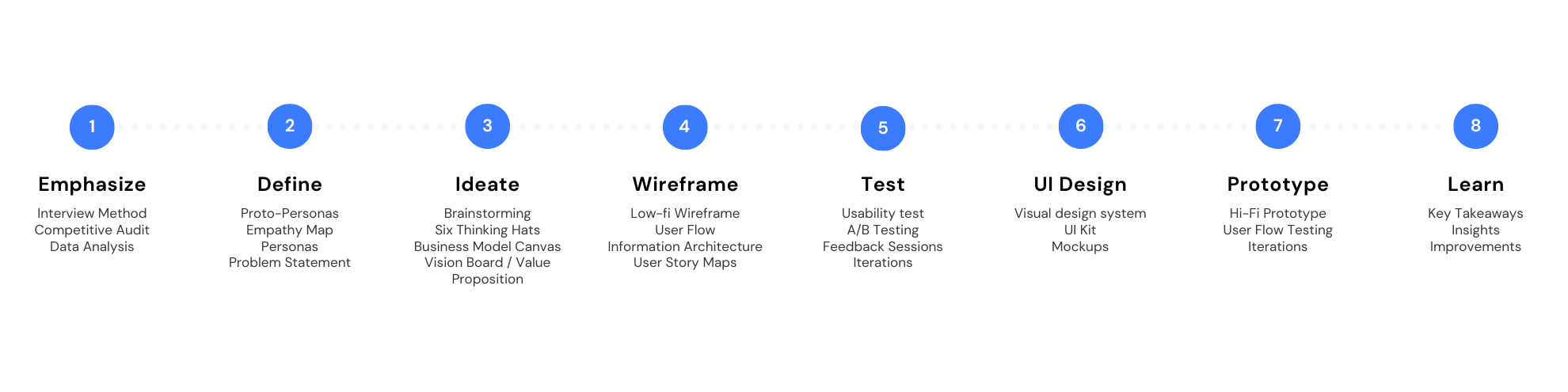
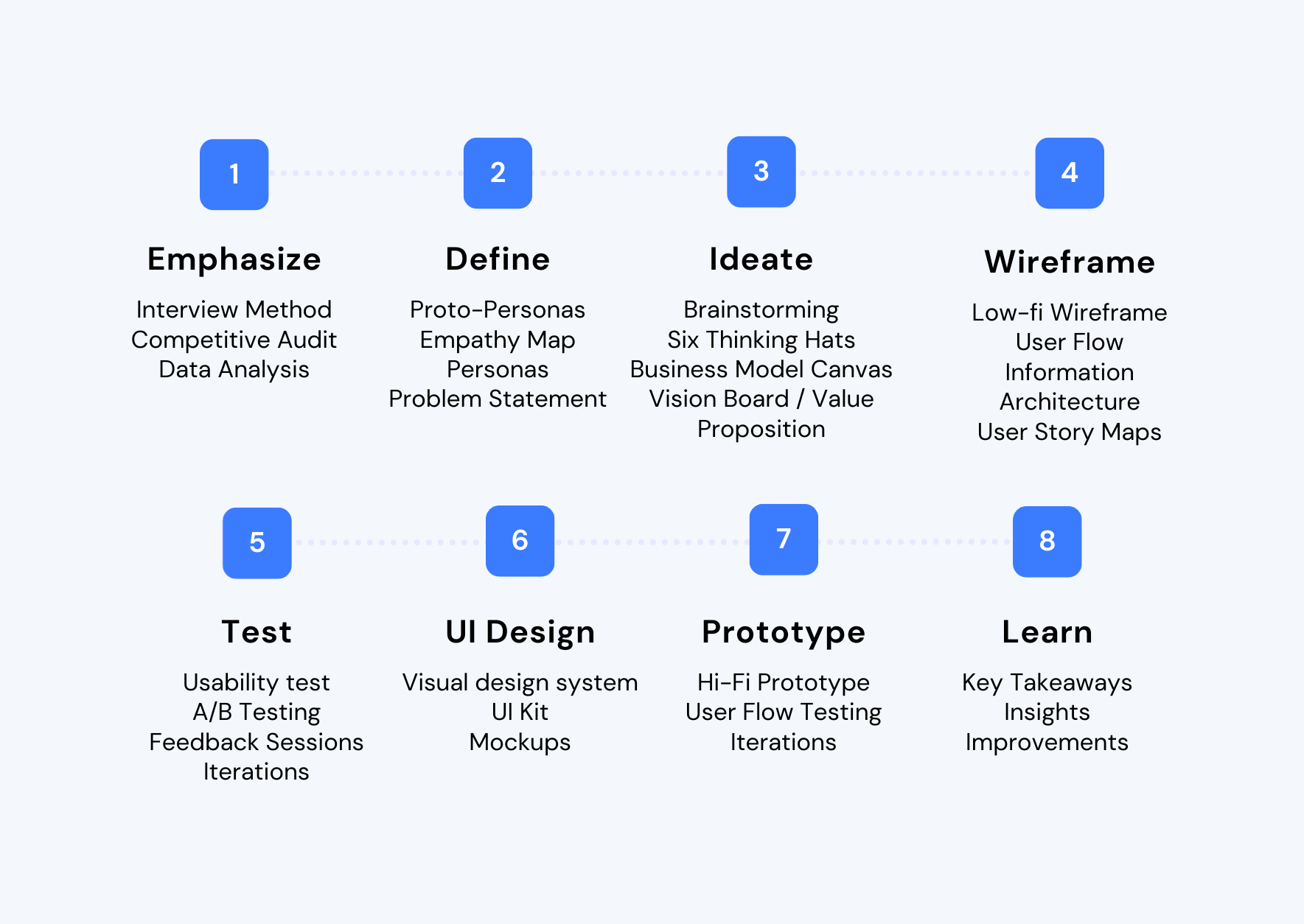
The framework below illustrates the Design Thinking process applied throughout the CultureConnect’ project. Each phase, from understanding users to testing and iteration, guided our decisions and enabled us to design a user-centered, effective, and impactful solution.

Design Thinking approach adapted for CultureConnect’, showing the path from the Emphasize stage to Learn.

Project Process

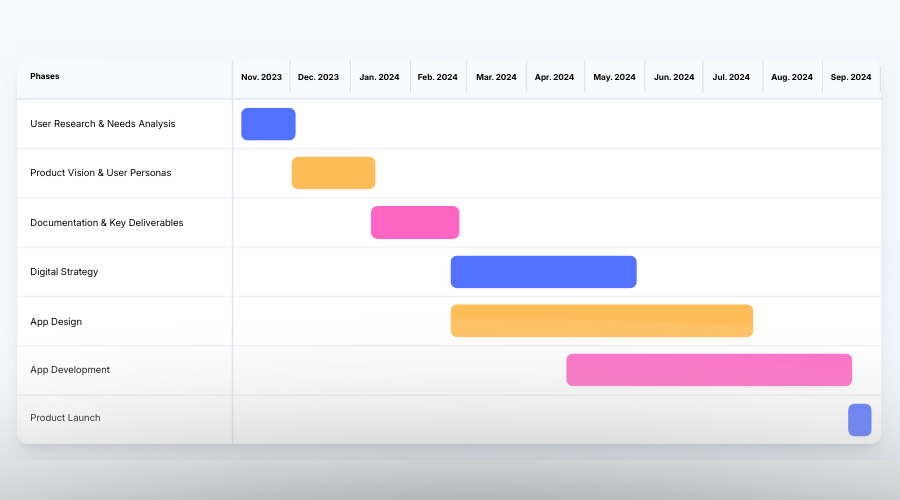
1. User Research & Needs Analysis

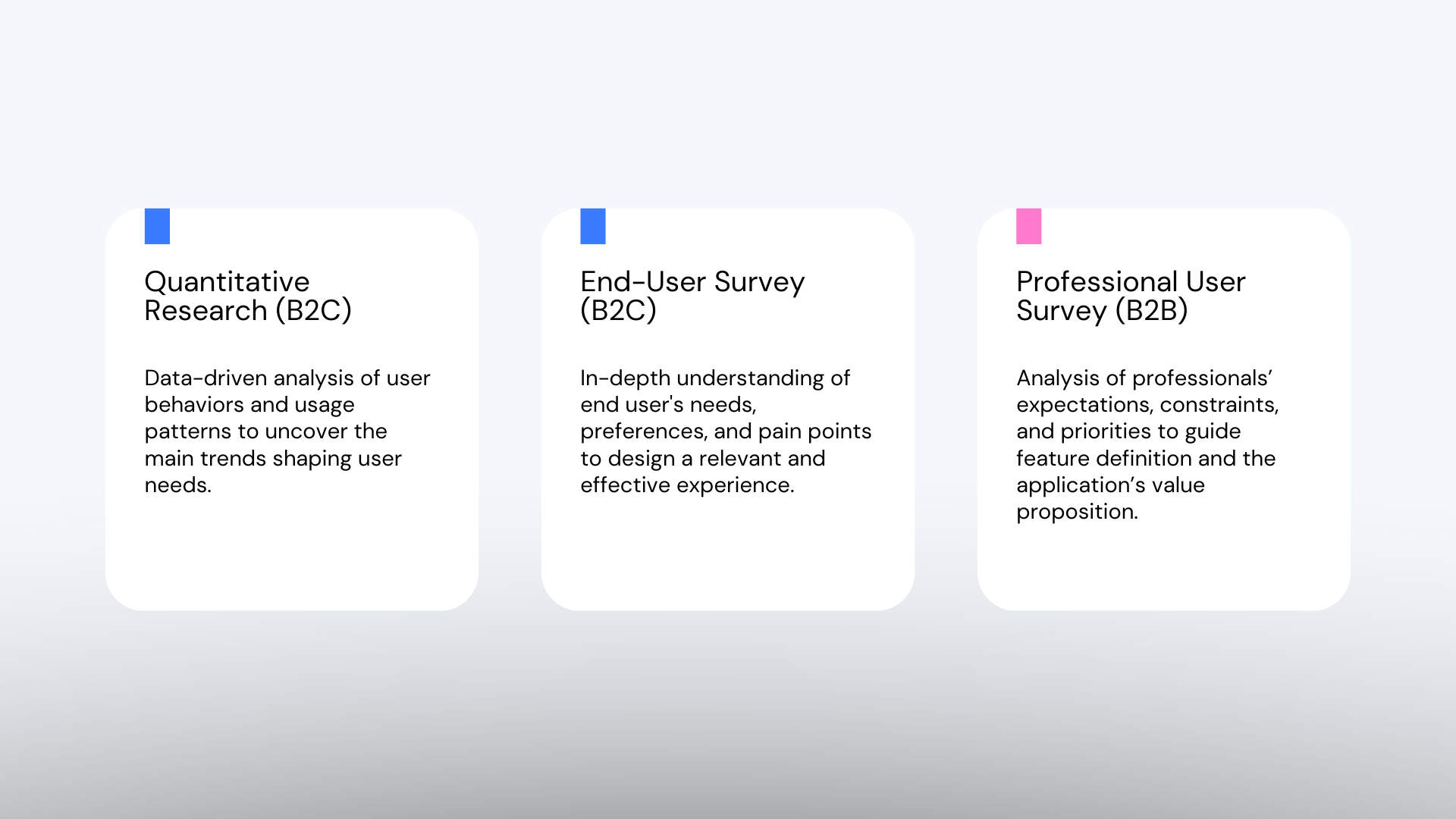
To assess the viability of the project during its initial phase, it was essential to conduct exploratory research in order to better understand the cultural market, analyze existing mobile applications in this sector, and identify user needs. Based on this research, we created proto-personas for our potential users (B2C and B2B) and produced an analysis and synthesis of individual interviews and survey responses.

This phase included the design of surveys and the conduction of semi-structured interviews with our potential target audiences:

  • Individual interviews: 14 participants (including 8 B2C users and 6 B2B users)
  • Online survey: 65 responses from qualified users, strictly matching profiles relevant to our solution

This approach allowed us to gather reliable and actionable insights by combining the depth of interviews with the diversity of survey responses, helping guide the application’s development and refine feature decisions.

A (1)

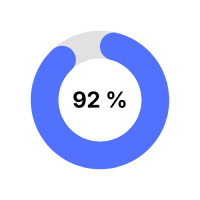
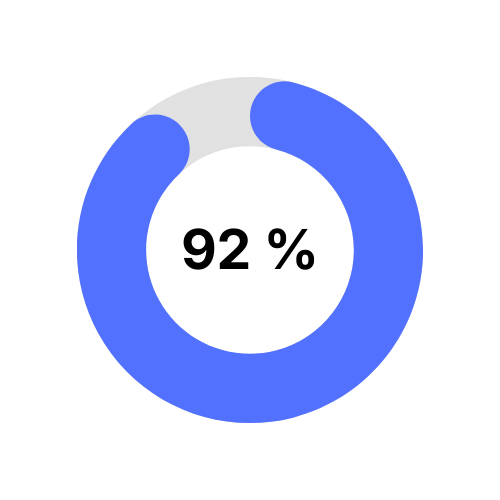
92% of users consult an average of 3–4 different channels, highlighting the absence of a centralized solution and resulting in wasted time.

A (2)

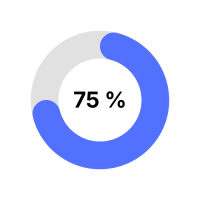
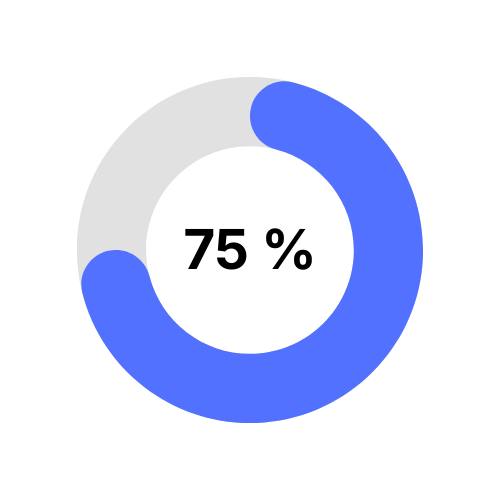
Over 75% of users express frustration with the difficulty of finding complete, centralized information.

A (3)

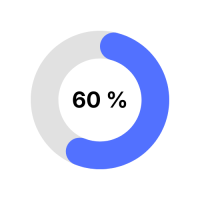
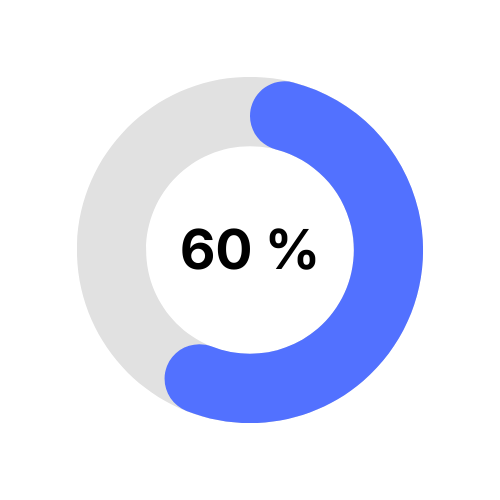
More than 60% cite lack of time as an obstacle, as the search process is perceived as time-consuming.

A (4)

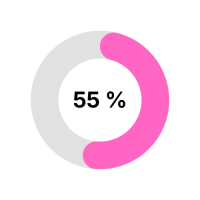
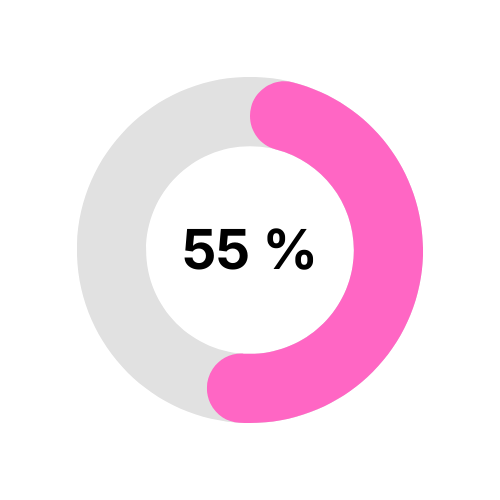
55% of event organizers identify growing competition as a key challenge in promoting and managing their events.

2. Product Vision & User Personas

We structured the product vision by defining both short- and long-term goals, while clearly positioning the application within a competitive landscape. This phase also enabled us to deepen our understanding of future users by consolidating final personas based on insights gathered during the exploratory research.

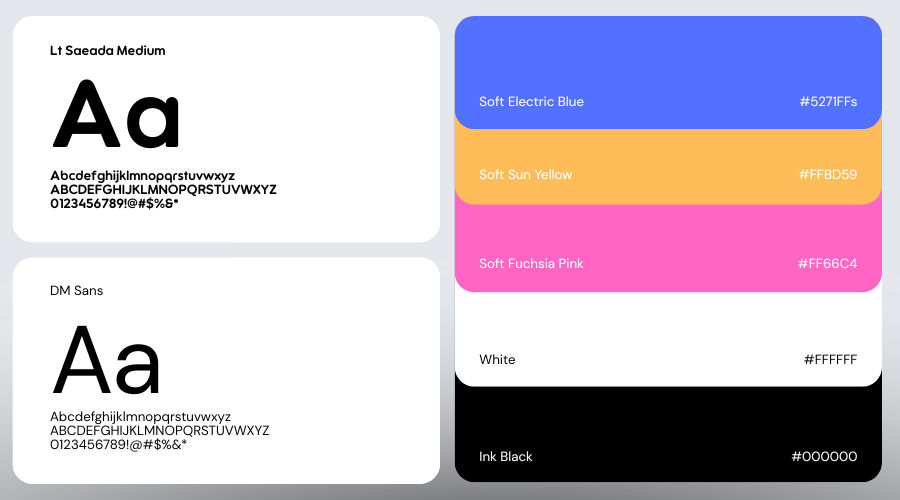
In parallel, we laid the foundations of the visual identity by developing the brand guidelines, including the logo, color palette, typography, and initial visual elements aligned with the product’s value proposition. We also explored multiple naming options to identify the one that best captured the essence of the product. Finally, we identified the key areas of expertise required to support the overall development of the project.

By combining strategic analysis, market research, visual definition, and user understanding, this phase established the essential foundations that would guide the evolution of the application in subsequent stages.

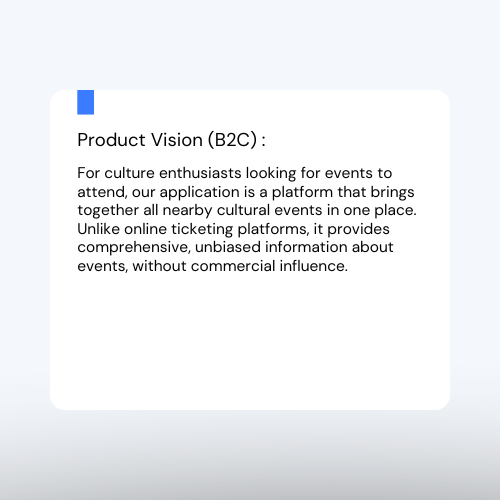
Product vision for B2C users: to create a platform connecting users with local culture.

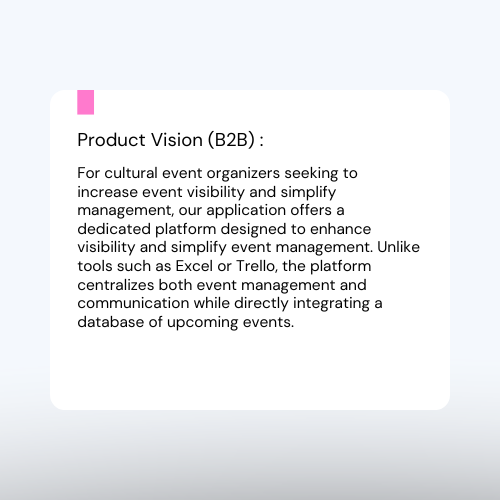
Product vision for B2B users: to provide a solution that simplifies the management and promotion of cultural events.

Presentation of the brand guidelines and visual identity, including color palette and typography.

3. Documentation & Key Délivrables

To effectively frame the project, we defined the projected budget and formalized all key reference documents required for its successful execution.

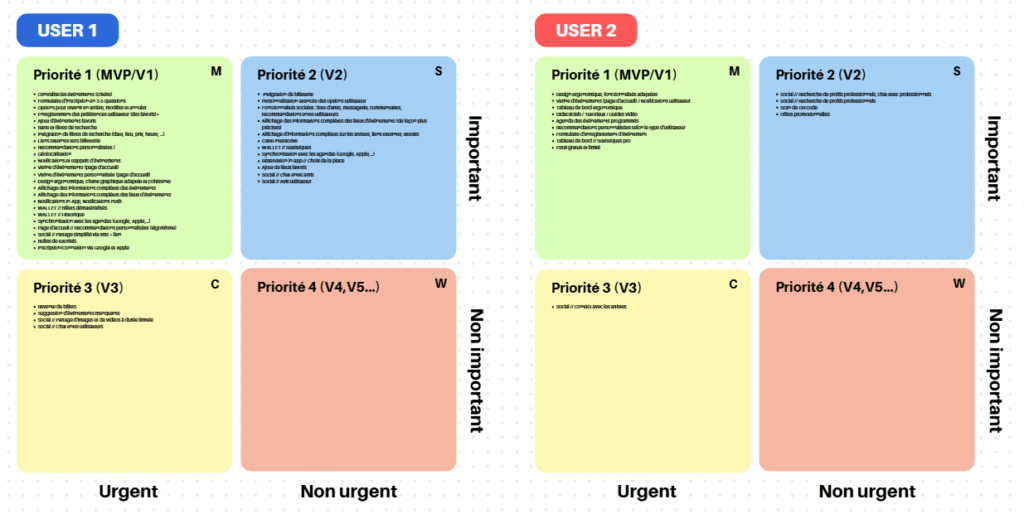
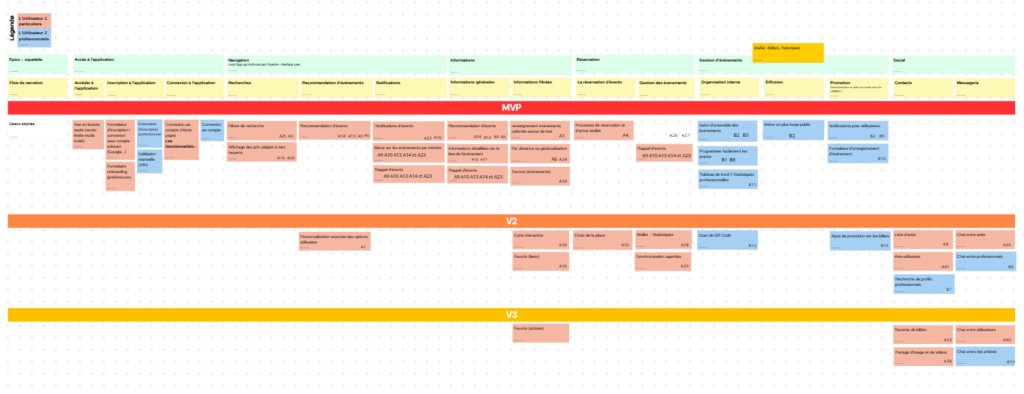
We wrote and prioritized user stories to define the features to be developed across the different versions of the application (MVP, V2, V3), and created a story map to visually represent and organize functional user journeys.

We established a detailed projected budget and developed multiple profitability scenarios to ensure the project’s economic viability. We also defined design constraints, covering GDPR compliance, security requirements, eco-design principles, and hosting considerations.

In parallel, we formalized the Project Management Plan, outlining governance, roles, responsibilities, and the methodology to be followed. We also produced the project specifications document, bringing together all functional and technical requirements necessary for the application’s development.

Application of the MoSCoW method alongside the urgency–importance matrix to identify and prioritize key features for the V1, V2, and V3 releases.

Visual story mapping for B2C and B2B users, covering MVP through V3, with key epics, user journeys, and user stories.

4. Digital Strategy

To support the future launch of the application, it was necessary to define a comprehensive digital strategy aimed at ensuring its visibility and optimizing its long-term viability.

We identified the most relevant communication channels while taking into account the technical and functional requirements needed for the next design phases. A structured editorial calendar was also created to plan content publication across these channels.

5. App Design

To ensure a coherent and effective user experience, a structured design phase was essential. We designed wireframes to define user flows and screen architecture, then created high-fidelity mockups to visualize the user interface and refine the overall experience.

We also expanded the visual identity by developing a detailed UI kit, including colors, typography, and components. Finally, we built a functional prototype in Figma, conducted user testing, and ran A/B testing sessions with qualified users to validate interactions and key application flows prior to development.

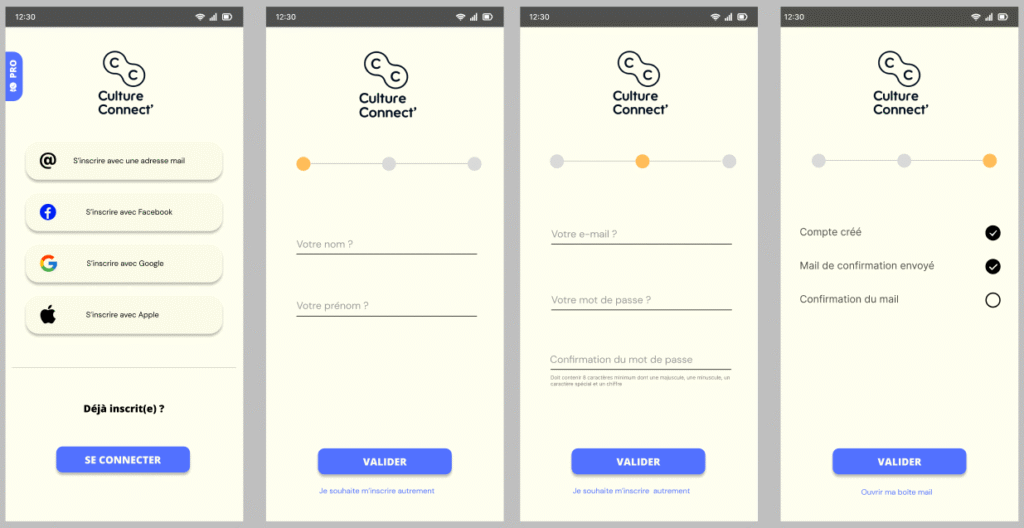
Login and sign-up page screenshots

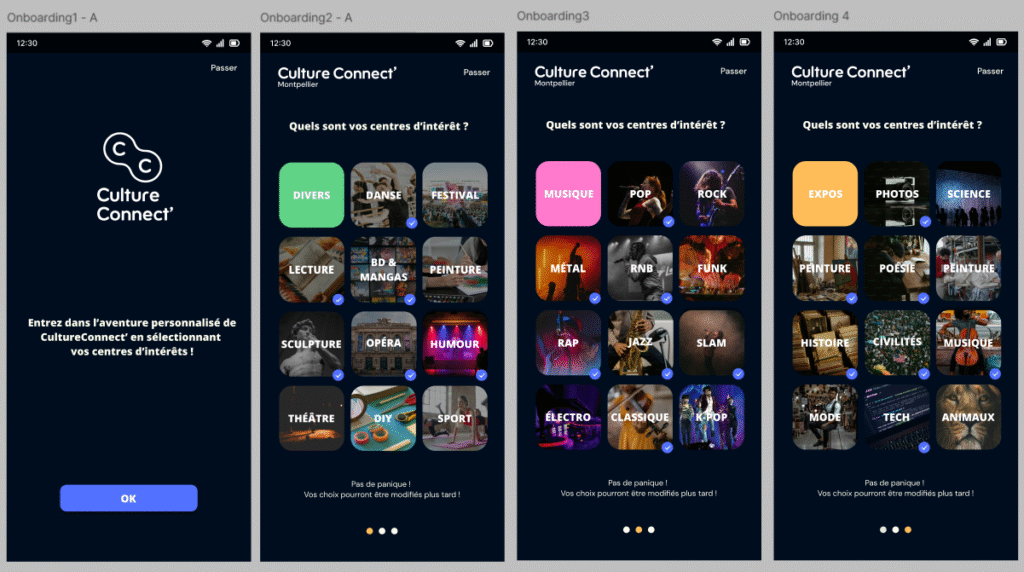
Onboarding flow screenshots (3-step process)

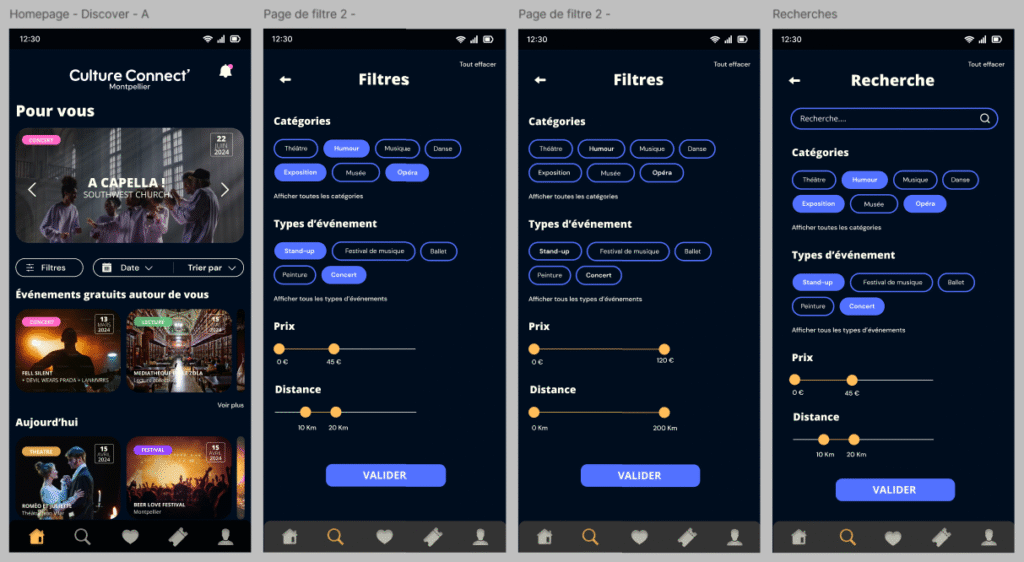
Home page and event search page screenshots highlighting the available search filters

6. Development (not implemented)

The development phase planned the integration of the user interface based on the wireframes and final designs, as well as the implementation of front-end and back-end functionalities.

The application was intended to be hosted on secure servers, with an internal database connected to the necessary APIs to leverage Open Data. A dedicated management interface (back-office) was also planned for professionals, enabling them to manage and publish their events. Finally, unit testing, quality assurance (QA) testing, and user testing sessions were scheduled prior to store deployment to ensure the quality and reliability of the application.

7. Launch (not implemented)

The launch phase was designed to include a launch event in Montpellier to promote the application to local users. At the same time, the app was planned to be published on app stores, following validation on Google Play and the Apple App Store, to make it available to the wider public.

Methodology & Iterative Process

The project followed an evolving rather than linear process. Working within an agile framework required frequent iterations, adjustments, and continuous adaptability.

UX research served as a guiding thread throughout the project:

  • Before design: identifying user needs and expectations to shape a suitable solution.
  • During design: validating prototypes through iterative testing and feedback.
  • After launch (not implemented): analyzing user behavior and collecting insights for ongoing improvements.
  • When issues arose: identifying and resolving unexpected obstacles or usability issues encountered during product use.

This iterative process ensured a flexible, user-centered approach and a solution aligned with real user expectations, while maintaining a high level of quality and relevance of the application.

Project Team

I would like to sincerely thank each member of the project team for their commitment and contribution throughout the project: Flavio Pisaniello, Stacy Navas, and Olivier Dorner.